Photo: Foto: Pexels / Ad Thiry
Mobile patrol, on-site guarding or technology: which security concept suits which property?
Checks, presence or detection: how to decide based on risk, property, hours of use and response needs, and which combinations make sense.
Guard, patrol or camera? Clarify the protection goal first.
In short: Mobile patrols, on-site guarding and security technology do different jobs. A mobile patrol checks a property at agreed times and also spots defects that no detector reports. In between, however, nobody is on site. With on-site guarding, someone is at the building or site permanently or for fixed periods, controls access and enforces the house rules. Technology such as intruder alarm systems, video surveillance or self-sufficient detectors detects around the clock but does not respond by itself. Only an alarm receiving centre that assesses the alarm and a response officer who drives out turn detection into protection. Which solution fits depends on four questions: What should be prevented, how large and open is the property, when is it busy and when empty, and what has to happen on site when something occurs? In practice, a combination is often the best answer.
Three building blocks, three different services
Our article Alarm response: who comes and what are they allowed to do? explains the difference between alarm response, mobile patrol and on-site guarding. It also covers the rights private security staff have. This article is about what each building block can do for your property and where it reaches its limits.
Mobile patrol: checks at agreed times
On a mobile patrol (in German: Revierdienst), a security officer visits several properties one after the other, for example at night, at weekends or after closing time. The officer checks doors, windows, fences and technical systems and documents every check. Lock-up checks, opening and locking services or checks of vacant buildings can be added.
Its strength is the human eye: a window left tilted open, a damaged site fence, an open cellar door or water on the floor are noticed during a round even if no detector is responsible for them. Patrols are visible and tie up fewer staff than permanent guarding. The limitation is just as clear: between two checks, nobody is on site. Anything that happens in that time is only noticed on the next round unless the property is also monitored by technology.
On-site guarding: someone is there
On-site guarding (in German: Objektschutz, also called a dedicated guard service) means that one or more security officers are at the property, permanently or for a defined period. They staff the gate or reception, make rounds, check who may enter and enforce house rules. The powers to do so come from the client: under Section 34a(5) of the German Trade Regulation Act (GewO), private security staff may only exercise the rights available to everyone and the rights contractually transferred to them.
Presence is strong wherever people are involved: visitors, deliveries, tenants, shift changes, conflicts at the entrance. A guard can speak to someone, turn them away, answer questions and check technical alarms on the spot immediately. The limitations: one person cannot see every part of a large site at the same time, and permanent guarding ties up a lot of staff. Anyone working alone also needs backup. The accident prevention regulation DGUV Vorschrift 23 “Wach- und Sicherungsdienste” (security and guarding services) requires the security company to monitor its staff if particular hazards can arise during the work (Section 7). For activities with a high potential for confrontation, such as security in retail or at events, the implementing instructions generally provide for two or more people.
Security technology with an alarm receiving centre: detection around the clock
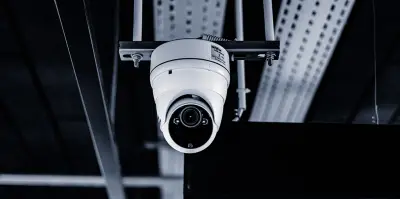
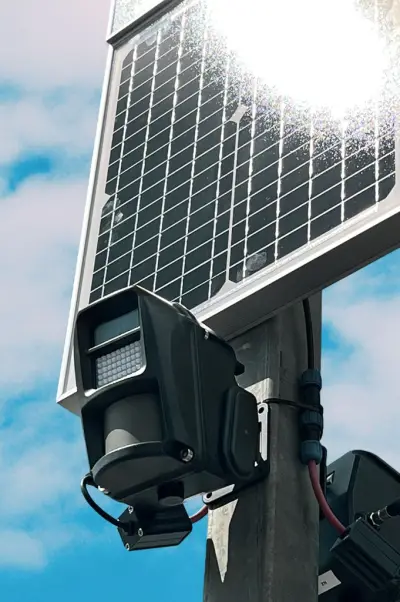
Technology includes intruder alarm systems, video surveillance and self-sufficient detectors that work without a mains power or internet connection. They report an event at the moment it happens, even on large, remote or unlit sites. Cameras also provide an image that helps to classify an alarm.
Technology alone does not respond, however. AEGIS Protect puts it this way on its page on intruder alarm systems: “A push notification is not yet an intervention.” Only a connection to an alarm receiving centre ensures that someone assesses the alarm and triggers a response. Further limitations: technology only detects what lies within its detection range. It cannot turn anyone away or enforce house rules. Video is also subject to data protection rules. Our article Planning video surveillance for businesses shows how to plan a system starting from the protection goal. And technology does not replace mechanical protection: the German police put coordinated mechanical security on doors and windows first. An intruder alarm system does not prevent a break-in; it increases the risk of the perpetrators being discovered.
Four questions for the decision
A security concept does not start with the question “guard or camera?” but with the property. Four questions carry the decision:
What should be prevented? Theft of materials and machinery, vandalism, arson, unauthorised use or occupation, danger to employees or visitors, business interruption. Have there already been incidents? Anyone who sees a risk to people needs different measures than someone protecting copper cables on an open site.
What does the property look like? Size, number of access points, fence, lighting, visibility, neighbourhood and location. Is there power and a network connection, or does the technology have to work self-sufficiently? How far is the property from the routes of a mobile patrol?
When is the property busy, and when is it empty? An office with fixed opening hours is empty at night and full during the day. A district with a hotel, shops and a car park is never completely empty. A construction site is deserted between the end of work and the next morning; a vacant building is empty all the time.
What has to happen on site when something occurs? Is it enough for someone to check after an alarm and secure the property again? Does someone constantly need to speak to people, control access points or take technical alarms? Who holds the keys, and who decides when the police or fire brigade are called?
Two further points come into play: the duration (a construction phase or a vacancy before a sale needs different planning from permanent operation) and requirements of third parties. Insurers, authorities or clients may require certain measures. What exactly applies is set out in your contract or official notice.
Which concept suits which property
The following overview is a guide, not a fixed rule. Every property has to be inspected on site.
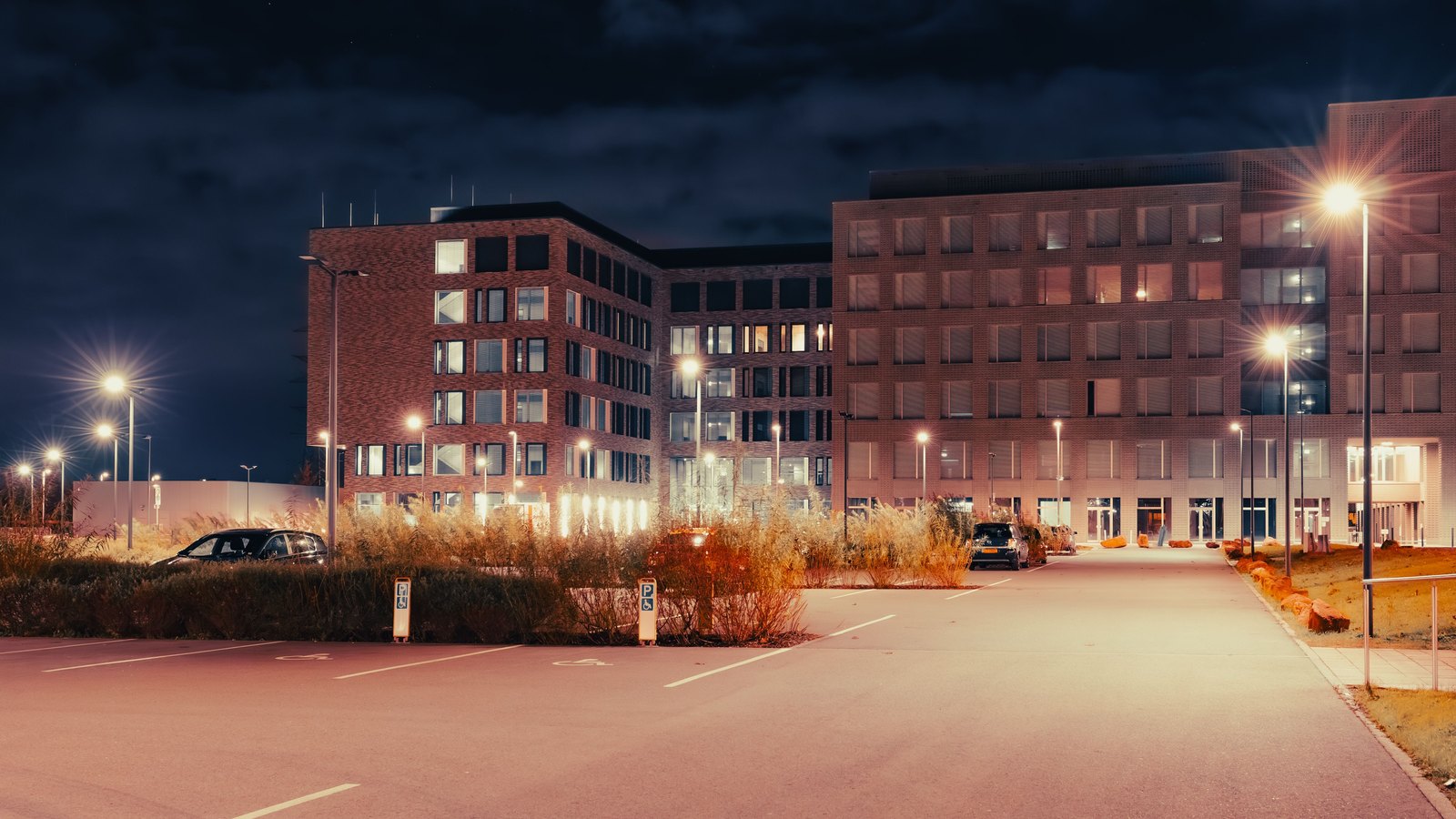
Offices, medical practices or administrative buildings with fixed opening hours: Nobody is there at night, and there are enough people during the day. An intruder alarm system connected to the alarm receiving centre, with response in the event of an alarm, is often sufficient. A mobile patrol can additionally check after hours that everything is locked. Our article Retrofitting an alarm system: wireless, bus or hybrid? shows how a system can be retrofitted while the business keeps running.
Mixed-use properties with public traffic (shopping and residential districts, car parks, hotels): People come and go constantly. House rules, someone to talk to and a fast response speak in favour of on-site guarding, supplemented by the handling of technical alarms. For patrols in areas with actual public traffic, the law requires guards to have passed an expert knowledge examination (Section 34a(1a) GewO).
Warehouses, logistics and industry with shift or day operation: During operation, a person at the gate or gatehouse often matters, for example for delivery traffic and contractors. Outside operating hours, technology, the alarm receiving centre and alarm response take over, with patrols if needed.
Construction sites: Outside working hours, inspection rounds, video or self-sufficient detectors are common, depending on the size, the value of the materials and the construction phase. Technology can be moved as construction progresses. What developers should clarify is covered in our articles Unauthorised entry to construction sites and Theft on construction sites.
Vacant buildings: Regular checks find water damage and open access points; self-sufficient detectors report unauthorised entry immediately. After repeated incidents, temporary on-site presence may be necessary. Our article Securing vacant buildings compares the options.
Remote open sites and facilities (for example solar parks or energy facilities): Permanent presence is rarely proportionate there, and patrol routes are long. Self-sufficient detection with an alarm receiving centre and alarm response is often a better fit.
Combinations: how the building blocks work together
Most properties do not need either people or technology, but a suitable chain. AEGIS Protect sums it up briefly on its construction site security page: “Guarding is manned. Surveillance is technology and the alarm receiving centre. Both can be combined.” Three patterns have proven particularly useful:
Technology, alarm receiving centre and alarm response: Detectors or cameras detect the event. The alarm receiving centre assesses the alarm first, for example using the image, and dispatches a response officer according to the agreed response plan. It calls the police if there are signs of a crime or danger. Our article Alarm monitoring: what happens when the alarm goes off? describes the process in detail.
Mobile patrol and technology: The patrol checks locks and condition at fixed times, and technology covers the time in between. If the same officers handle patrol and alarm response, the person who arrives after an alarm already knows the property.
On-site guarding and technology: The guard on site takes fire alarm, lift or building services alarms and checks them immediately. Technology extends their view to areas they cannot watch constantly. An alarm receiving centre in the background can also provide backup for lone working.
A concept may change. After incidents, over public holidays, during conversion work, vacancy or stocktaking, presence can be increased temporarily and scaled back afterwards. On its on-site guarding page, AEGIS Protect answers the question of whether technology can replace a guard service cautiously: “Sometimes complement, rarely replace. At the gate during peak times, someone on site often makes the difference.” Conversely, where a property is simply empty at night and nobody needs to be spoken to, permanent presence is often more than the risk requires.
What the quote and contract should cover
Whichever building blocks you choose, these points should be agreed in writing before the start.
Licence and qualifications: Anyone providing commercial guarding services needs a licence under Section 34a GewO. Guards must be reliable and at least prove that they have completed an instruction course at the Chamber of Industry and Commerce (IHK). For certain activities, the expert knowledge examination is also mandatory. Companies and guards are recorded in the Bewacherregister (guard register), which the Federal Statistical Office keeps for the competent authorities (Section 11b GewO).
Liability insurance: It is a prerequisite for the licence. The minimum sums insured are set out in Section 14 of the Guarding Ordinance (BewachV). Check whether the cover matches the values in your property.
Scope and procedure: Under Section 6 of DGUV Vorschrift 23, the scope and procedure of the security work, including any ancillary tasks, must be laid down in writing. For a mobile patrol, this includes the number and time windows of checks, what is checked and what happens if defects are found. For on-site guarding, it covers duty hours, tasks, handovers and reporting channels.
Service instructions and powers: The security company governs the service in service instructions that state expressly that guards do not have police powers (Section 17 BewachV). Which house rights you transfer should also be laid down in writing. According to the implementing instructions for DGUV Vorschrift 23, ancillary tasks such as operating systems, winter services or warehouse work must be listed expressly in the service instructions. Staff may not follow client instructions that go beyond them.
Your contribution as the client: Under Section 6 of DGUV Vorschrift 23, the security company may only take on an assignment if avoidable hazards on the property have been eliminated or adequately secured, and under Section 8 it must request this from you. The implementing instructions give safe walkability and adequate lighting of all specified inspection routes as an example. If your employees and the security staff work at the same location, both employers must cooperate on occupational safety (Section 8 of the Occupational Safety and Health Act).
Response plan and keys: For technology with alarm monitoring: who is informed for which alarm, when does the response officer go out, when are the police called? Where are the keys kept, who hands them over, and how is this documented?
Confidentiality and documentation: Under Section 17(3) BewachV, guards are obliged in writing not to disclose trade and business secrets. Ask how checks, alarms and incidents are documented and how you can access the records.
Review: Agree when the concept will be reviewed, for example after incidents, when the use changes or on a fixed date.
From our case studies
Published projects by AEGIS Protect show how different the answers can be:
Vacant house in Kleve: For a vacant residential building that had been occupied and vandalised twice within a short time, IB West gGmbH requested a mobile patrol. Patrols were not possible at this location. Instead, AEGIS Protect installed self-sufficient detectors that detect people as soon as they enter the property. According to the case study, an intruder was detected on entering around eleven days after installation, the siren was triggered and the police were alerted. (View case study)
Commercial and residential district at Münster central station: In a district with a hotel, housing, retail and a car park, AEGIS Protect provides a dedicated guard service with patrols around the clock, handles technical alarms such as the fire alarm system and lift emergency calls, and enforces house rules. (View case study)
LVM-Preußenstadion construction site: Outside construction hours, security officers walk agreed inspection routes several times a day, check fences, gates and locks, and document unauthorised presence. In addition, the site is marked with signposted video surveillance at the fence. (View case study)
Office complex in Münster: In a new building housing several companies, the intruder alarm system, fire alarm system, video surveillance and building management system are connected to the AEGIS Protect alarm receiving centre. The intruder alarm system protects sensitive areas outside business hours. (View case study)
Assessment
Mobile patrols, on-site guarding and technology are not competitors but tools for different tasks. Checks find defects, presence handles dealings with people, technology detects continuously within its detection range, and an alarm receiving centre with alarm response ensures that a report is followed by a reaction. A good concept starts with the protection goal and the daily routine of the property and uses as much presence as necessary.
According to AEGIS Protect, the company offers all building blocks from a single source: on-site guarding, mobile patrol and alarm response, self-sufficient video surveillance and alarm monitoring by its own alarm receiving centre. If you are looking for the right mix for your property, get in touch. For an initial assessment, the location and type of property, its hours of use and whether technology or a service is already in place are helpful.
Note: This article provides a general overview (as of November 2026). It does not replace legal advice. Which measures insurers, authorities or contracts require for your property must be checked in each individual case.

Security that builds trust.
Welcome to AEGIS Protect, your reliable partner for comprehensive protection and security. Our goal is to give you a safe environment where you can feel relaxed and protected. With years of experience, modern technology and a team of professional security specialists, we meet your security needs reliably and efficiently. Count on us for round-the-clock protection wherever you need it.