Photo: Foto: Pexels / K (@kelly)
Securing a solar park: protection against copper and module theft during construction and operation
How offenders operate, what the police recommend, how the alarm chain works on large sites and which insurance applies in which phase.
Securing a solar park: construction is different from operation.
In short: Solar parks are targeted by thieves in both project phases, but in different ways. During construction, it is mainly stored cable drums, modules and equipment that disappear from a site with no mains power or internet connection. During operation, thieves cut installed copper cables out of the module rows; sometimes this is only noticed days later. A fence on its own only slows them down. Protection becomes effective when mechanical security, detection with images, verification by the alarm receiving centre and a response agreed in advance work together. Which insurance policy covers a theft in which phase is something you should clarify before construction starts.
What thieves are looking for in solar parks
Police press releases from this year show a clear pattern: above all, the target is copper.
Middle Franconia (Bavaria): The Middle Franconia police headquarters attributes at least eight break-ins at solar parks between November 2025 and January 2026 to one group of offenders. The offenders forced their way into the fenced sites, cut through string cables (the cables that electrically connect rows of modules) and in some cases stole up to 80 kilometres of cable. The police put the value of the stolen goods at a high six-figure sum. Six suspects were arrested in January 2026.
Ascheberg (Coesfeld district, North Rhine-Westphalia): According to the Coesfeld police, offenders broke open the chain-locked gate of a fenced solar park in early February 2026 and cut all the connecting cables to the junction boxes of more than 16,000 modules. In total, around 92 kilometres of copper cable were missing. The police narrowed the time of the crime down to a period of one week.
Grebenstein (Kassel district, Hesse): Here, according to the North Hesse police headquarters, the offenders cut through the fence in several places and stole around 15 kilometres of copper cable.
Schashagen (Ostholstein, Schleswig-Holstein): Almost 100 cable drums stored on pallets disappeared from the construction site of a solar park over a weekend in October 2026. The Lübeck police directorate puts their value at more than 120,000 euros.
Modules also remain a target. As early as 2022, the Lower Saxony State Criminal Police Office (Landeskriminalamt Niedersachsen, LKA) pointed out that thefts from ground-mounted PV systems cause particularly high losses because of the large number of modules stolen. It assumed that a large proportion of these crimes were committed by highly mobile gangs operating on a commercial basis.
The cases mentioned are similar: the fence or gate was forced, investigators assume several offenders or larger vehicles were used to take the goods away, and the crimes were only noticed afterwards. We deliberately do not give nationwide case numbers here, because the information available comes from individual police press releases and regional analyses.
Construction phase: exposed material, missing infrastructure
During construction, the value on site is often particularly easy to reach: cable drums, palletised modules, inverters, tools and machinery. At the same time, the fence may not yet be closed, and there is no grid connection and no fixed internet line. The construction areas keep moving.
Conventional, hard-wired video surveillance is a poor fit for this. It needs a power supply, a network and cable routes, and it depends on fixed positions. By the time it is in place, the construction section has often already moved on.
What works well in the construction phase:
Plan the logistics: Where possible, deliver material so that it is installed promptly. Do not spread cable drums and modules across the site; store them together in a separate, monitored storage area.
Close the access routes: Lock gates after working hours and clearly regulate access rights and keys. Where the terrain allows, use barriers to make it harder to drive up to the site.
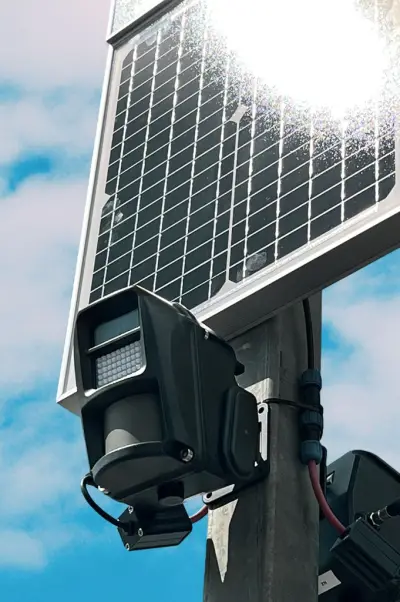
Monitor the points at risk: Access roads, material storage areas and containers first. According to AEGIS Protect, self-powered detectors work with a battery, a camera and a radio link to a bridge that is connected to the alarm receiving centre via the mobile network. This means they need neither a mains connection nor an internet connection and can be moved as construction progresses. A prerequisite is sufficient mobile network reception on the site.
Larger areas and an overview: For extensive sections, the mobile Sentinel platform is an option. Where height and an overview matter, a camera tower.
Use personnel in a targeted way: For large deliveries, after incidents or over long weekends, construction site security or a mobile patrol service can complement the technology.
General questions about liability and protection on construction sites are covered in our article Theft on the construction site: who is liable and how to protect it?.
Operating phase: copper in the module rows and a long fence line
Once the park has been built, the copper sits in the module rows. The cases in Ascheberg and Grebenstein show that such crimes can go unnoticed until someone checks on site: in each case, the police could only narrow the time of the crime down to several days. The damage goes beyond the value of the material: the cables have to be relaid, and until then part of the feed-in is lost.
One misunderstanding should be cleared up early: just because a solar park generates electricity does not mean the surveillance technology is automatically supplied. At night, the modules deliver no power. Cameras, detectors and transmission therefore need their own secure power supply. Our article Video surveillance during a blackout explains what matters when powering video technology.
For ground-mounted systems, the Lower Saxony LKA recommends, among other things:
a welded double-wire mesh fence at least 2.50 metres high, if necessary with protection against climbing over and crawling under,
a fence with intrusion detection, so that unauthorised entry is detected early and a security response can be initiated,
monitored gates and access roads at the same height as the fence, and clear rules on access and keys,
fixings that can only be released with special tools or by destroying them,
visible, permanent marking of system components and GPS modules in junction boxes and inverters so that stolen components can be located,
regular checks for damage or markings.
Plant monitoring can show when individual strings fail. It does not replace intrusion detection, because it only reports once the cable has already been cut.
Detect, verify, respond: the alarm chain
A fence buys time, nothing more. Whether this time is used depends on three links:
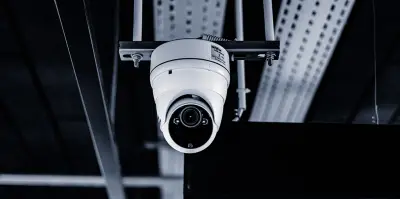
Detection with images: Detectors on the fence, gates and critical areas detect movement and provide images of the event. On large sites with wildlife, grazing animals and vegetation, image verification determines the number of false alarms. With the self-powered detectors, according to AEGIS Protect, an AI assesses the image before an alarm reaches the alarm receiving centre. This is said to result in around 95 per cent fewer false alarms than triggering by motion alone.
Verification by the alarm receiving centre: The alarm receiving centre (Notruf- und Serviceleitstelle) assesses the event on the basis of the images and works through the agreed response plan.
Response according to plan: Depending on the system and the situation, this is followed by a live announcement to the intruders, information to the operator or site management, and dispatch of the security response. The police are called in if there are signs of a crime or danger.
For this to work at night, the alarm receiving centre needs a site file: a site plan with gates and access roads, the rules for keys or gate codes, contact persons and how to reach them, and the escalation sequence. Our article Alarm monitoring: what happens when the alarm system goes off? explains how the alarm receiving centre handles alarms. What responders on site are allowed to do is described in Security response service: who comes when the alarm goes off, and what are they allowed to do?.
Insurance: which policy applies in which phase?
Whether a theft is reimbursed depends on which contract applies in the respective phase and what it says. The non-binding model conditions of the German Insurance Association (Gesamtverband der Deutschen Versicherungswirtschaft, GDV) show how differently this can be regulated:
Construction all risks insurance (ABBL 2018): In the basic conditions, the loss of insured items is expressly not insured. An additional clause (TK A 5140) can include theft of components that are firmly attached to the structure. Loosely stored material such as cable drums is not covered by this clause.
Erection all risks insurance (AMoB 2021): Here, the loss of insured items is included in principle. For theft, the model provides for a separate deductible. Losses that are only discovered during a stock check, on the other hand, are excluded.
Electronic equipment insurance (ABE 2020): During operation, it can cover loss through theft, burglary or robbery.
Insurers deviate from these models and often agree their own security requirements. You should therefore clarify before construction starts, and again before handover to operation: which policy applies until acceptance, and which afterwards? Is theft included, including for stored material? Which security measures are mandatory, and how high is the deductible? Is loss of revenue also insured?
Case study: solar park under construction near Münster
After a break-in at a solar park in the Münster area that was still under construction, the client contacted AEGIS Protect in the evening. The following day, the team installed self-powered detectors at the access roads, the material storage area and other areas at risk, and connected them to the alarm receiving centre. No mains power or internet connection was needed, and the locations can be adjusted as construction progresses. You can find the project report under Solar park secured within one day.
Checklist before talking to a security provider and insurer
Project phase and schedule: construction, commissioning, handover, operation
Site plan with fence line, gates, access roads and neighbouring paths
Delivery schedule and storage location for cables, modules and inverters
Power supply and mobile network coverage on site
Previous incidents in this park or in the surrounding area
Insurance contract: cover per phase, security requirements, deductible
Marking and documented serial numbers of the components
Contact persons, escalation sequence and rules for keys or gate codes
Planned maintenance, grazing and service visits, so that they do not end up as alarms
Assessment
Securing a solar park means taking the phase seriously: in the construction phase, it is about exposed material on a site without infrastructure; in operation, it is about copper installed in the module rows and a long fence line. In both cases, mechanical security slows offenders down, detection recognises them, the alarm receiving centre verifies, and only the agreed response completes the chain. The page Monitoring and securing solar parks describes how AEGIS Protect looks after solar parks.
If you are building or operating a park, get in touch with us. The location, project phase and period are enough for an initial assessment.
Note: This article provides a general overview (as of November 2026). The cases mentioned are taken from police press releases, and the insurance information from non-binding GDV model conditions. Specific cover and security requirements can only be derived from your contract. The text does not replace legal or insurance advice.

Security that builds trust.
Welcome to AEGIS Protect, your reliable partner for comprehensive protection and security. Our goal is to give you a safe environment where you can feel relaxed and protected. With years of experience, modern technology and a team of professional security specialists, we meet your security needs reliably and efficiently. Count on us for round-the-clock protection wherever you need it.