Photo: Pexels / Faron Brazis
Monitoring event sites: how mobile technology secures build-up, teardown, nights and restricted areas
Camera tower, self-powered detectors and alarm receiving centre: what technology can take over on event grounds, where staff remain indispensable and what to clarify about power, mobile coverage and time windows.
Author: AEGIS Protect
The festival is over. The equipment stays overnight.
In short: Outside event hours, an event site can be secured well with mobile video surveillance. A camera tower or self-powered detectors detect people on the empty grounds, an alarm receiving centre checks the image and dispatches an intervention team if needed. As long as visitors are present, admission, house rules and crowd guidance remain the job of security staff.
For the technology to report reliably at night, a few things should be settled in advance: when it is armed, who may still enter the site, how power and mobile connectivity are secured, what the alarm receiving centre does when an alarm comes in and how staff, contractors and visitors are informed about the cameras.
Why the empty hours are the critical ones
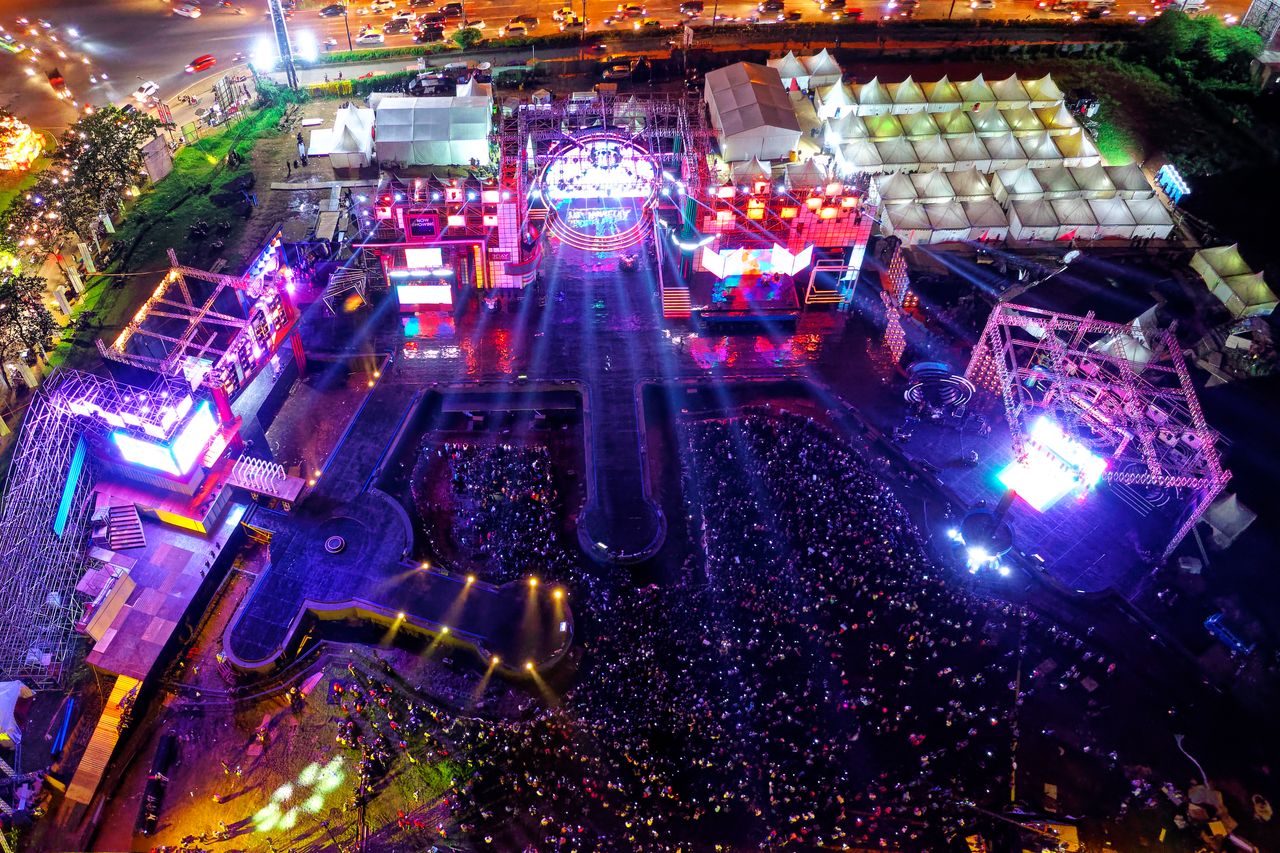
Whether it is a street festival, a music festival, a Christmas market, an open-air concert or a corporate event: the event itself often lasts only hours or a few days, but the site is occupied for much longer. During build-up, stage and lighting equipment, cables, generators, tents, sales stands and beverage stores are already on site. After the last guest leaves, much of it stays until teardown.
During this time the area is hard to control:
Fences and gates are often open during build-up and teardown because deliveries and contractors need to get through.
Many companies and people work on the site at the same time without knowing each other. Someone who has no business being there hardly stands out.
At multi-day events there are nights between event days when everything is set up but nobody is there.
The area is large and has several entrances. Guarding it around the clock with staff alone ties up a correspondingly large number of hours.
This is exactly what mobile security technology is meant for: it monitors the area when, according to plan, nobody should be there.
What technology can take over and where staff remain indispensable
Technology is particularly suitable for:
the empty site at night and between two event days,
restricted areas that nobody should enter even during operation, such as technical and storage areas, backstage or container yards,
access roads, material stores and stage areas during build-up and teardown.
What it cannot replace is what people do on site: checking admission, enforcing house rules, guiding visitor flows, talking to guests and stepping in at bottlenecks. Our page Event security describes these tasks. Requirements from a safety concept demanded by the authorities also remain in place; which requirements apply is clarified by the organiser and the competent authority. How we combine staff and mobile technology at events is shown on the Events sector page.
Camera tower, self-powered detectors or Sentinel: what suits which site?
Camera tower: an overview from above
A mobile camera tower carries the cameras on a mast and brings technology and power supply together in one unit. It plays to its strengths when large open areas, tent villages or access roads need to be overseen from above. If you want to hire a mobile camera tower connected to the alarm receiving centre for an event site, you will find our four variants BASIC, FLEX, SOLAR and BOX there, with data sheets. In our range, the FLEX variant sits on a trailer and needs no forklift or crane for unloading; BOX is intended for locations with little space.
For planning, the standing area matters most. The tower should not block escape routes or delivery zones and should be positioned so that the cameras see the critical areas without looking beyond the site onto paths or neighbouring properties.
Self-powered detectors: individual points without a power connection
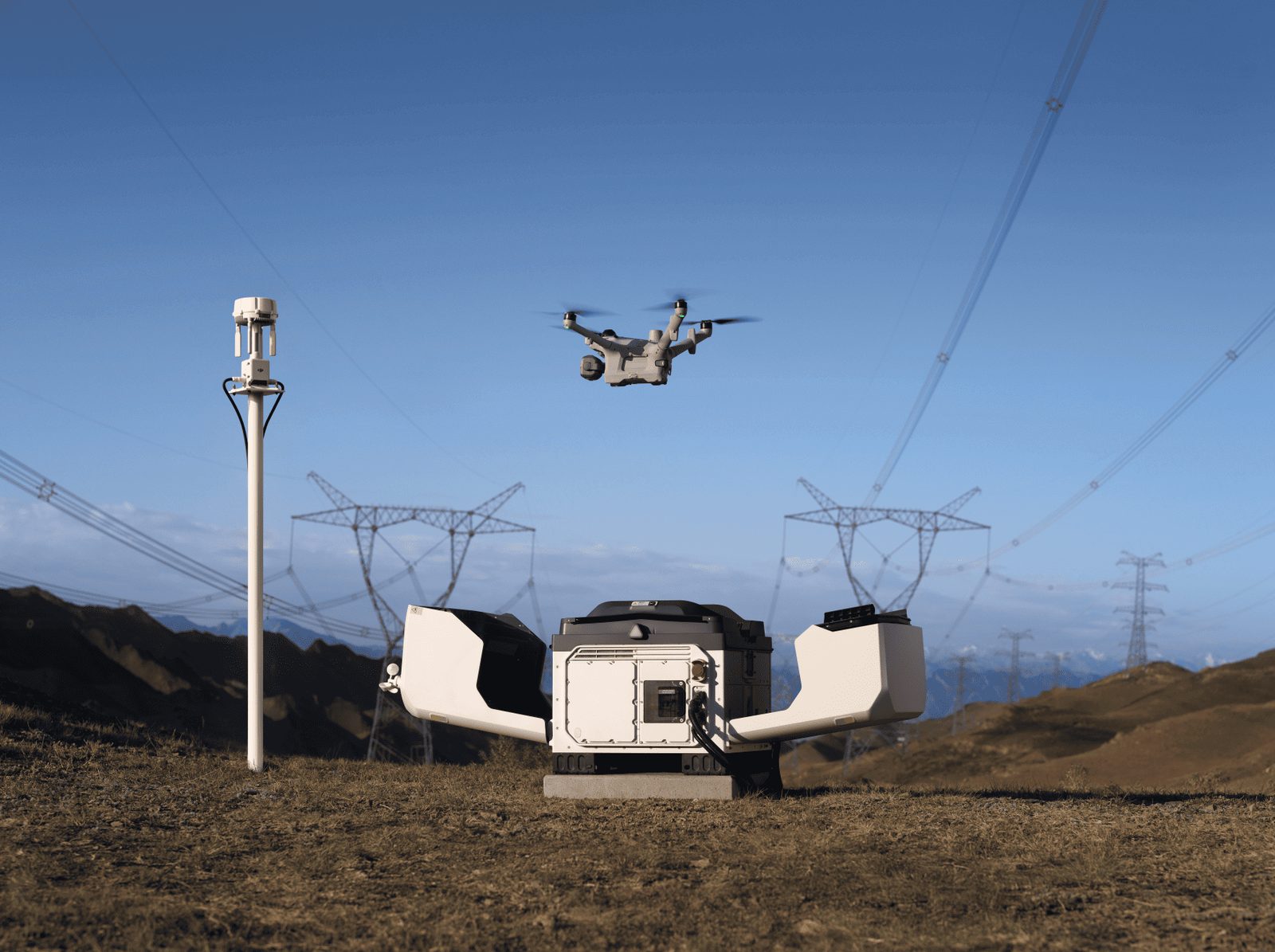
Individual points of risk do not need a tower. Compact battery-powered detectors that need no power connection combine motion detection, a camera and illumination. They communicate by radio with a bridge, which transmits the event and image via mobile network to the alarm receiving centre. Typical locations on an event site are technical and storage containers, the back of the stage, rear entrances or a parked vehicle with equipment. The devices can be moved when the site changes between build-up, operation and teardown.
Sentinel: an additional solution for restricted areas and larger sections
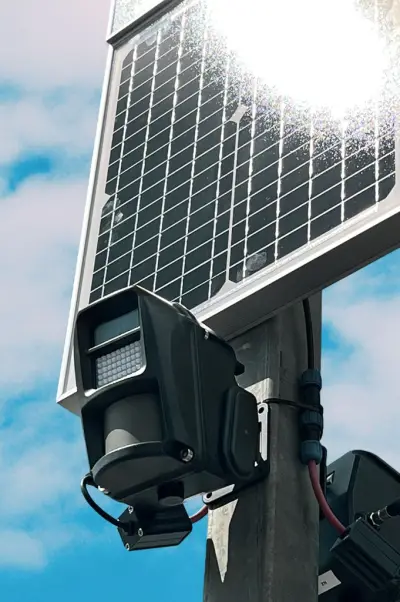
In addition to a tower and individual detectors, we use the self-powered site surveillance system Sentinel. It is designed for outdoor areas without power or internet connections and works as an additional solution, for example for temporarily closed areas with a defined duration. On our sector page for events, we use Sentinel among other things for restricted areas.
The options can be combined, for example a tower for an overview of the access road and main area, detectors on containers and rear entrances, and Sentinel as a complement on restricted areas. We can connect the systems to the same alarm logic in the alarm receiving centre. A detailed comparison is available on the page Camera tower or self-powered detectors.
Power and mobile network: what is different on event sites
Power. On many event sites, power comes from generators or temporary distribution boards that belong to the event operation. If this supply is switched off at night or during teardown, the surveillance must not depend on it. Depending on the model, our camera towers can be supplied via a mains connection, a generator or hybrid or solar support; self-powered detectors run on batteries. Clarify which supply will keep running until the last day of teardown.
Mobile network. Towers and self-powered systems usually transmit alarms via the mobile network. The German Federal Network Agency (Bundesnetzagentur) points out that in areas with high user volumes, for example at major events, a mobile network can reach its capacity limits even where there is coverage in principle. The agency's coverage maps are also a forecast. For planning, this means:
Test reception where the tower or bridge will actually stand, rather than just checking the map.
Clarify with the provider which network is used and how the system reacts if the connection is weak or drops.
Treat a loss of connection as a separate alert to the alarm receiving centre and define in the action plan what happens next.
If the technology is also to transmit alerts during operation, explicitly address the possible network load caused by the audience.
Time windows and access: when is the surveillance armed?
On an event site, the schedule decides whether an alarm is genuine. A person on the stage is normal at 3 pm during build-up, but not necessarily at 3 am. That is why a plan belongs in place before commissioning:
Arming: from when (for example after the end of the teardown shift or after the last guest) and until when the surveillance is active, for each day separately.
Authorised persons: which companies and people may still enter the site at night, for example for lighting rehearsals, deliveries, cleaning or catering, and how they register with the alarm receiving centre.
Overnight stays: if crew, showmen or campers sleep on the site, these areas must be excluded or the detection zones adjusted.
Changes: who reports changes of plan to the alarm receiving centre when times or areas shift at short notice.
What happens when an alarm comes in
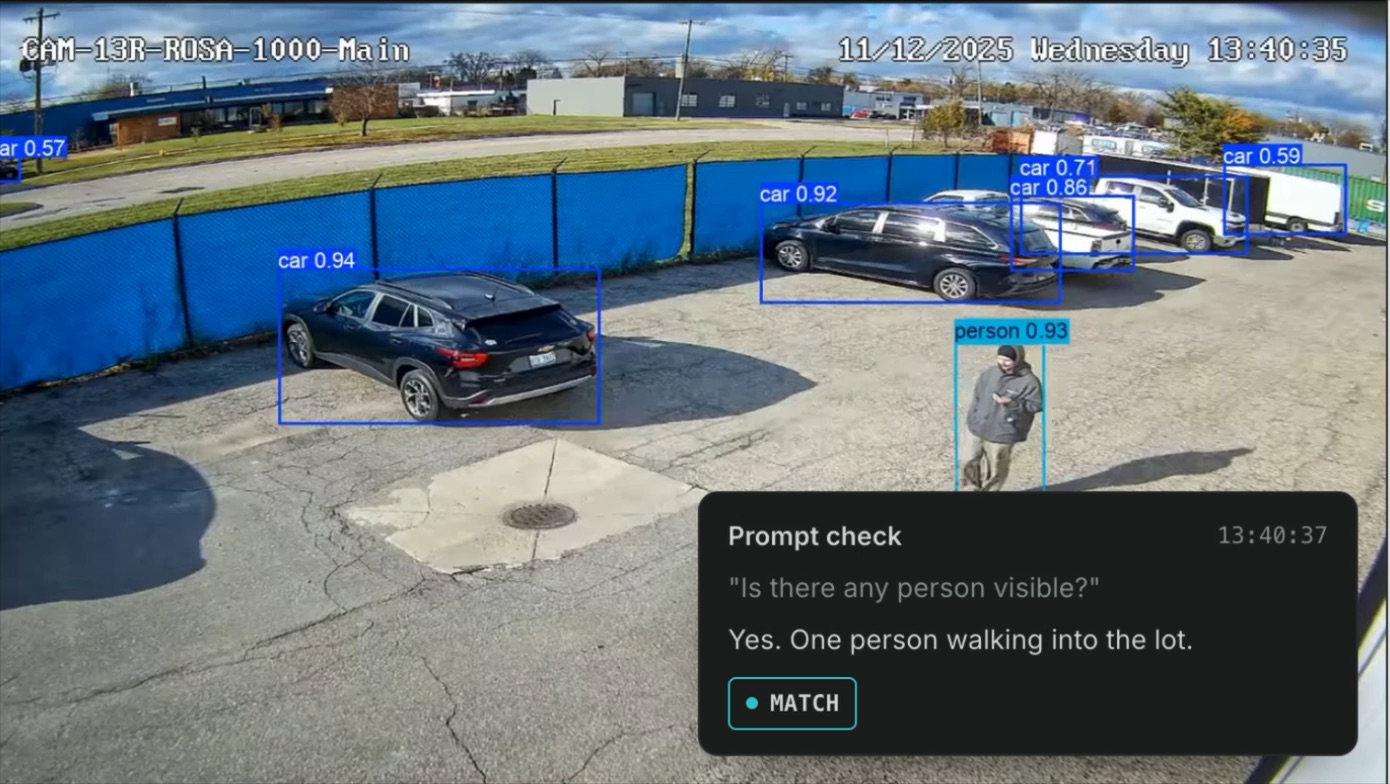
When a detector or tower camera detects movement, the event is sent with an image to the alarm receiving centre. There, it is assessed first: can a person be seen at all? Do they belong to one of the registered companies? Is the alert in an area that is currently armed?
If the suspicion is confirmed, the alarm receiving centre follows the agreed action plan. It can address the person via the loudspeaker on the camera tower, inform the organiser's contact person and send an intervention officer to the site. The police are notified if there are signs of a criminal offence or a danger. How alarm monitoring and the action plan work in detail is explained in our article Alarm monitoring: what happens when the alarm goes off?; what intervention officers are allowed to do on site is covered in Intervention service: who responds to an alarm and what are they allowed to do?
For this to work at night, the alarm receiving centre needs the following in advance:
a site plan with areas, entrances and the locations of the technology,
reachable contact persons from the organiser for every night,
information on how an intervention officer gets onto the site (gate, key, code, meeting point).
An example from practice
We have not yet published an event deployment as a case study. However, our case study on the Historic Town Hall in Münster shows how a mobile camera tower is operated on a public square with a defined night-time recording window. The questions are the same: time windows, fields of view, coordination with everyone involved and a clear chain through to the alarm receiving centre.
Checklist before build-up
Which phases should be monitored: build-up, the nights between event days, teardown?
Which areas are critical, for example technology, storage, stage, access roads or containers?
Is one tower enough, are individual detectors enough, or is a combination needed? Is there a standing area that does not block escape routes or delivery zones?
Which power supply will still be running when the event power is switched off?
Has mobile reception been tested at the mounting point, and is a loss of connection reported?
Have arming times, authorised persons and overnight stays on the site been defined and shared with the alarm receiving centre?
Is the action plan in place: who is informed, how does an intervention officer get onto the site, who can be reached at night?
Have staff, contractors and visitors been informed about the cameras, and are signs planned at all entrances?
When does the surveillance end, and who dismantles the technology?
Assessment
At events, mobile video surveillance makes the most sense for the hours when nobody should be on the site. During operation, it supports staff at restricted areas but does not replace them. Whether a tower, detectors, Sentinel as a complement or a combination is the right fit depends on the area, the entrances, power, mobile coverage and the schedule. If you are planning a site for an event, we will be happy to discuss which combination makes sense: get in touch.

Critical infrastructure, business and private clients.
We find solutions.
Welcome to AEGIS Protect, your reliable partner for comprehensive protection and security. Our goal is to give you a safe environment where you can feel relaxed and protected. With years of experience, modern technology and a team of professional security specialists, we meet your security needs reliably and efficiently. Count on us for round-the-clock protection wherever you need it.