Our August: 6 New Sites, 32 Detectors and One Prevented Break-In
A month of new installations, mobile security deployments and one incident where the technology did exactly what it was designed to do.
What happened at AEGIS Protect in August
6 new sites, 32 detectors and one real alarm incident
August was, above all, a practical month for us.
No theoretical concepts and no test scenarios – just new sites, installations in the field and security technology that has to perform reliably in everyday operation.
By the end of the month, three numbers stood out:
6 new sites secured.
32 detectors installed.
1 attempted break-in stopped at an early stage.
For us, however, these are not just numbers.
Behind every site is a property that somebody is responsible for protecting. Behind every installed detector is the question of which area needs to be monitored. And behind every alarm is the expectation that both the technology and the response processes work exactly when they are needed.
Most importantly: an attempted break-in was stopped early
The most important moment of the month was probably not our largest project or the most unusual installation.
It was an alarm.
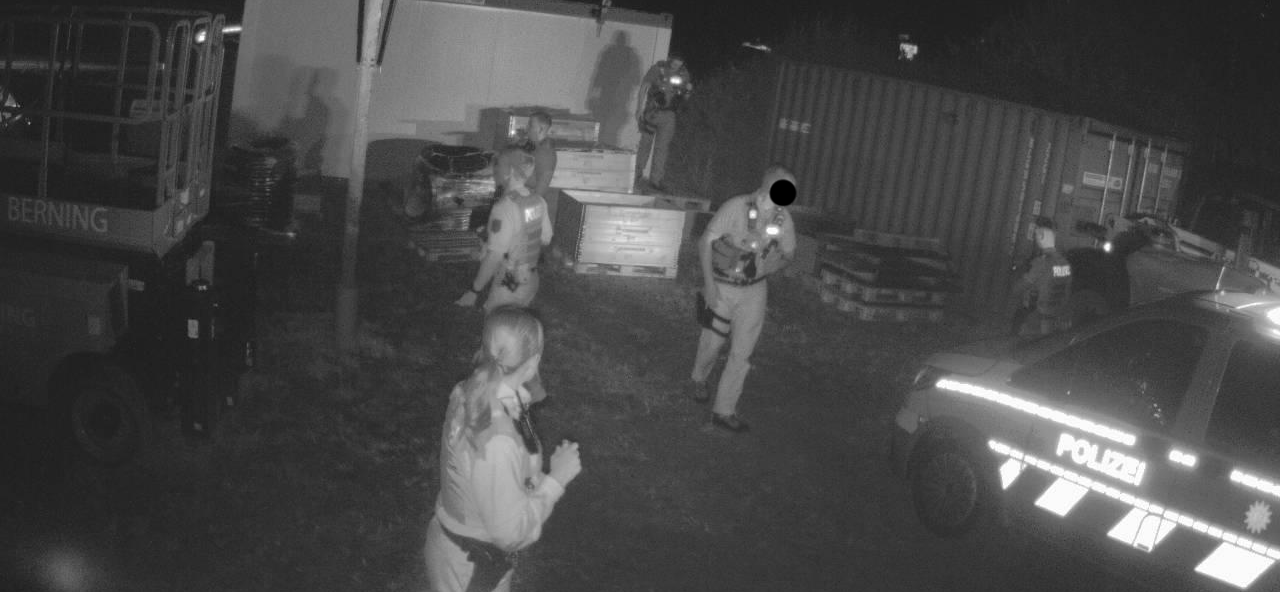
An attempted break-in was detected early by the installed surveillance system and could be stopped before it developed further.
That is exactly why we deploy these systems.
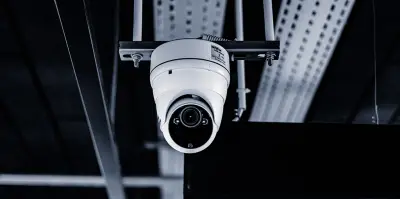
In our view, video surveillance should not simply be used to review footage of damage the following morning.
The real benefit comes when a security-relevant event is detected early enough for action to be taken while the incident is still happening.
Detect, assess and respond – before an attempt becomes actual damage.
For us, that is the difference between simple recording and active site surveillance.
Why we are increasingly using autonomous security technology
August once again demonstrated how strong the demand for mobile and autonomous solutions has become.
Conventional video surveillance is an excellent solution when a site needs permanent security equipment and the required infrastructure is already available.
In practice, however, things often look very different.
There may be no suitable power supply.
There may be no internet connection yet.
The site layout may constantly change.
An area may only require surveillance for a few months.
Or a security solution may be needed at short notice, making extensive cabling both slow and economically inefficient.
These are exactly the situations in which we increasingly rely on autonomous detection and video surveillance.
No dependency on the site's power or internet connection
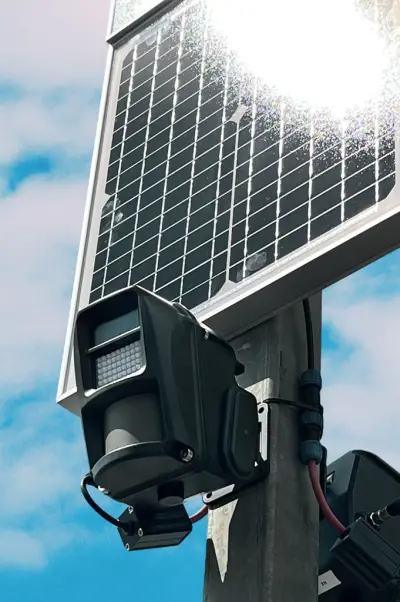
One of the major advantages of our mobile systems is their independence from existing site infrastructure.
The detectors and cameras have their own power supply and communicate wirelessly.
This means that installation does not first require power cables, network cabling or additional infrastructure to be laid across the site.
This makes the systems particularly suitable for:
construction sites
industrial sites
storage and open areas
temporarily used areas
remote properties
energy and infrastructure projects
vacant properties
areas without an existing power or internet connection
This allows us to provide surveillance even in locations where a conventional camera system would require considerable additional installation work.
Fast installation also means faster protection
Time is an important factor when it comes to temporary security.
If valuable materials suddenly arrive on a construction site or a new area needs to be secured, it is of little use if cables first have to be planned and installed over a period of several weeks.
Mobile detectors can be installed comparatively quickly in the relevant locations and aligned with the required surveillance area.
This allows us to adapt the security solution directly to the actual situation on site.
And if the situation changes, the surveillance setup can change as well.
A detector monitoring a material storage area today can later be repositioned to protect another part of the project.
This flexibility is a major advantage, particularly on dynamic construction sites and temporary projects.
32 detectors do not simply mean 32 cameras
Our installations are not about placing as many devices as possible across a site.
Before every installation, we ask several questions:
Where could someone enter the site?
Which areas are particularly vulnerable?
Where are the valuable assets located?
Which movements should be detected – and which should not?
Which viewing angle is required for effective alarm verification?
Placement is therefore at least as important as the technology itself.
For us, 32 newly installed detectors mean 32 individually assessed surveillance areas.
Depending on the site, this could be an entrance, a section of fencing, a material storage area, a building access point or an open area.
Mobile video surveillance is more than simply installing a camera
A camera on its own is not a complete security concept.
What matters is what happens after detection.
A good system must first identify relevant movement and then provide enough information to assess the situation.
Only then can the appropriate response follow.
In simplified terms, the security chain looks like this:
Detection → Image capture → Alarm verification → Assessment → Response
The response that follows depends on the site and the predefined response plan.
For us, it is this connection between technology and action that matters most.
Six new sites – six different requirements
Even when the same technology is used, hardly any two sites are identical.
Site size, entrances, existing lighting, construction progress, the location of valuable assets and possible access routes all differ.
That is why we do not try to apply one rigid standard system to every site.
The technology should adapt to the site – not the other way around.
Mobile security solutions make this possible.
Components can be placed exactly where they are needed and repositioned as the project develops.
What we take away from August
For us, August confirms a development we have been seeing for some time:
Security technology needs to become more flexible.
Not every site needs a permanently installed video surveillance system.
Not every area has access to power and network infrastructure.
And not every security challenge can be solved effectively with a conventional camera tower or an extensive fixed installation.
Mobile and autonomous detection systems fill exactly this gap.
They can be deployed at short notice, positioned flexibly and operated independently of the site's existing infrastructure.
And in the end, the number of devices installed is not what matters.
What matters is whether a security-relevant event is detected when it actually happens.
At one of our sites in August, that is exactly what happened.
Six new sites and 32 detectors are a strong result.
But for us, the fact that an attempted break-in was detected and stopped at an early stage is the much more important number.

Security that builds trust.
Welcome to AEGIS Protect, your reliable partner for comprehensive protection and security. Our goal is to give you a safe environment where you can feel relaxed and protected. With years of experience, modern technology and a team of professional security specialists, we meet your security needs reliably and efficiently. Count on us for round-the-clock protection wherever you need it.