Photo: Pexels / Mike van Schoonderwalt
Construction site theft: who is liable and how can you protect your project?
When machinery, tools or installed components disappear, the financial loss is quickly followed by questions of responsibility and allocation of risk.
Preventing theft before material loss causes construction delays
Construction site theft causes more than material loss
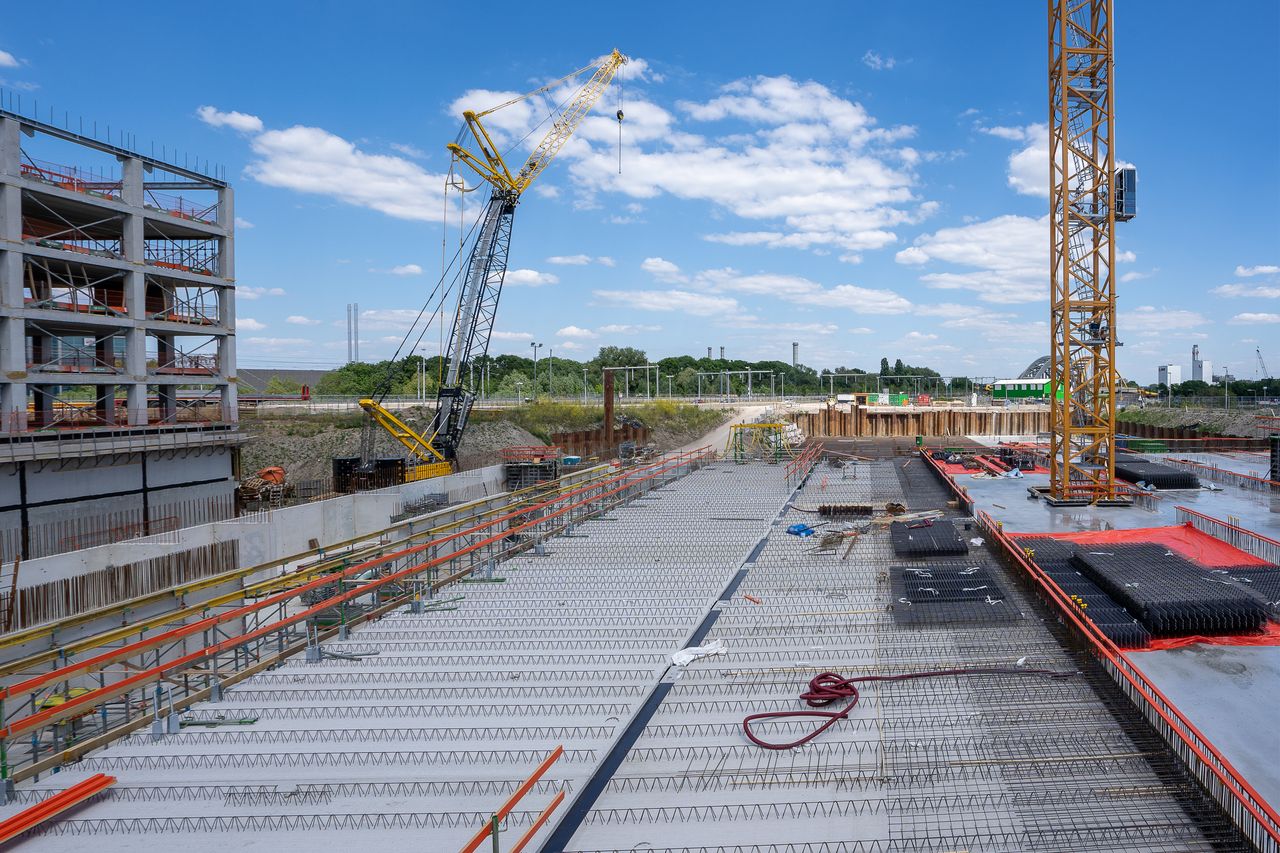
Construction sites often contain substantial assets within a comparatively open and constantly changing environment. Tools, machinery, cables, metals, technical equipment and delivered building materials may remain on site overnight or at weekends. At the same time, access routes, storage areas and working zones change as the project progresses.
A theft can therefore cause significantly more than the immediate replacement cost. If machinery or a component required for the next stage of construction is missing the following morning, work may have to stop. Replacement orders, additional installation work and resulting delays can considerably increase the overall impact.
Who is liable for theft from a construction site?
There is no universal answer. The construction contract, ownership of the stolen property, the time at which the loss occurs, acceptance of the works and any agreed security or insurance obligations can all be relevant.
Under a German contract for work, the allocation of risk is particularly important. According to Section 644 of the German Civil Code, the contractor generally bears the risk relating to the work until acceptance. In simplified terms, where completed work is lost before acceptance, the financial risk may therefore still remain with the contractor.
This should not be confused with liability based on fault. Allocation of risk primarily determines which party bears the consequences if work is lost or has to be carried out again before acceptance. The precise position always depends on the contract and the circumstances of the individual loss.
What if the VOB/B forms part of the contract?
Where the German VOB/B construction contract conditions have been validly incorporated into the contract, an additional obligation applies. Section 4(5) requires the contractor to protect completed work and items handed over for execution against damage and theft until acceptance.
Particularly on larger projects, the parties should therefore determine before construction begins who is responsible for protecting individual areas, materials and works. A general statement that a site is “secured” is rarely sufficient to establish clear responsibilities.
Tools, machinery and building materials: who owns what?
The type of property stolen also matters. Tools, machinery and mobile equipment belonging to a construction or trade contractor generally remain that company’s property. Theft of a power tool, measuring device or machine therefore initially causes a direct loss to the company that owns it.
The situation can be more complex for building materials and components that have already been incorporated into the building. Under German property law, items installed to create a building may become essential components of it. Ownership and allocation of risk do not necessarily transfer to the same party at the same time.
Consequently, determining who ultimately bears a loss requires more than identifying the owner. The construction contract, acceptance status, areas of responsibility, possible breaches of duty and insurance cover should all be considered.
Does construction insurance cover theft?
Construction insurance should not automatically be regarded as comprehensive theft insurance covering everything kept on a building site.
The model conditions published by the German Insurance Association for construction insurance distinguish between insured physical damage and property going missing. Certain categories such as construction equipment, hand tools, containers and other items may also fall outside the standard scope of cover.
Actual cover therefore depends on the individual insurance contract, additional clauses, excesses and any security requirements imposed by the insurer. The policy should be reviewed before work starts, particularly where valuable machinery, substantial quantities of materials or long-term construction projects are involved.
Construction site protection starts with a risk assessment
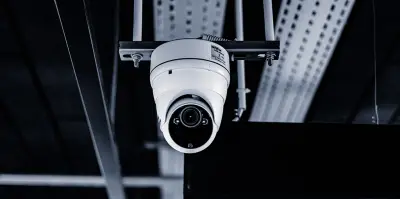
Effective security rarely consists of a single measure. Fencing may make unauthorised access more difficult but does not automatically prevent targeted theft. A camera may provide images, but without an alarm response it has limited ability to influence an incident that is already taking place.
A layered security concept should therefore reflect the site’s location, size, current construction phase and the assets present.
Limit access points: Close unnecessary entrances and establish clearly defined access routes.
Organise material storage: Avoid leaving valuable or easily transportable items unsecured in open areas wherever possible.
Document machinery and equipment: Serial numbers, asset identification and assigned responsibilities support investigation following an incident.
Use lighting strategically: Entrances, storage areas and other critical zones can be illuminated where appropriate.
Use technical detection: Movement within defined security zones can be identified at an early stage.
Establish professional alarm handling: Detecting an event is only the first step; the subsequent process is equally important.
Adapt security to the construction phase: Access routes, site boundaries and high-risk areas change throughout a project.
Mobile video surveillance for changing construction sites
Fixed security systems are not always practical on temporary or extensive construction sites. Power and network connections may be unavailable or located far from the area that currently requires protection.
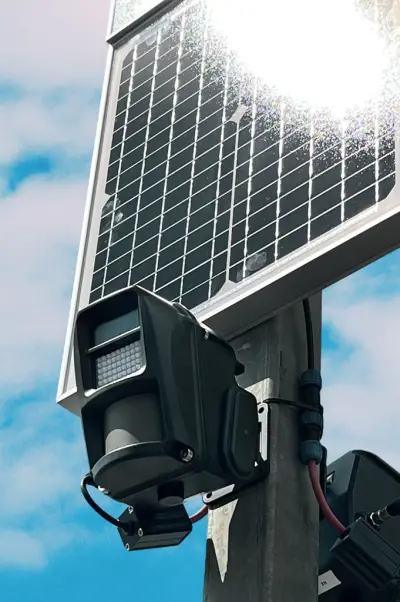
Mobile, autonomous surveillance systems can instead be positioned at entrances, material storage areas, site accommodation or open construction zones. As work progresses, the protected areas can be adjusted accordingly.
In practice, the combination of detection, visual alarm verification and a defined response plan is particularly important. If relevant movement is detected, the event can be reviewed to determine whether an unauthorised person has actually entered a protected area. Confirmed incidents can then trigger the previously agreed response procedure.
Video surveillance alone is not a security concept
A camera does not automatically prevent theft. The process behind the technology is crucial:
Which areas are monitored?
When is an event treated as an alarm?
Who assesses the situation?
Who is informed?
What response has been agreed for the site?
A professionally planned solution therefore combines technology with organisational measures. Depending on the project, this may include technical monitoring outside working hours, connection to a monitoring centre, on-site audio warnings or deployment of an intervention service.
Weekends and longer shutdown periods require particular attention
Risk can increase when a construction site remains unattended for extended periods. During weekends, public holidays, company shutdowns or interruptions to construction, the natural presence of employees, suppliers and subcontractors is absent.
Before such periods begin, project managers should establish which materials will remain on site, which areas require particular protection and whether the existing security measures still reflect the current stage of construction.
Clear responsibilities reduce risk
Construction site security should not become a priority only after the first theft. At the start of a project, the client, main contractor and participating trades should establish which security measures are required and who is responsible for implementing them.
Early planning does more than reduce the risk of theft. Defined responsibilities, documented security measures and established reporting procedures can also help assess incidents more quickly and allow construction work to resume sooner following a loss.
AEGIS Protect develops security concepts for construction sites and temporary areas. Depending on the individual site, mobile autonomous video surveillance, alarm verification, monitoring centre connections and mobile patrol or intervention services can be combined. The appropriate solution should be based on the actual site, the assets present and the construction programme.
The legal allocation of risk may differ depending on contractual arrangements and the circumstances of the individual case. Disputed questions of liability should therefore be assessed on the basis of the relevant construction contract.

Security that builds trust.
Welcome to AEGIS Protect, your reliable partner for comprehensive protection and security. Our goal is to give you a safe environment where you can feel relaxed and protected. With years of experience, modern technology and a team of professional security specialists, we meet your security needs reliably and efficiently. Count on us for round-the-clock protection wherever you need it.